
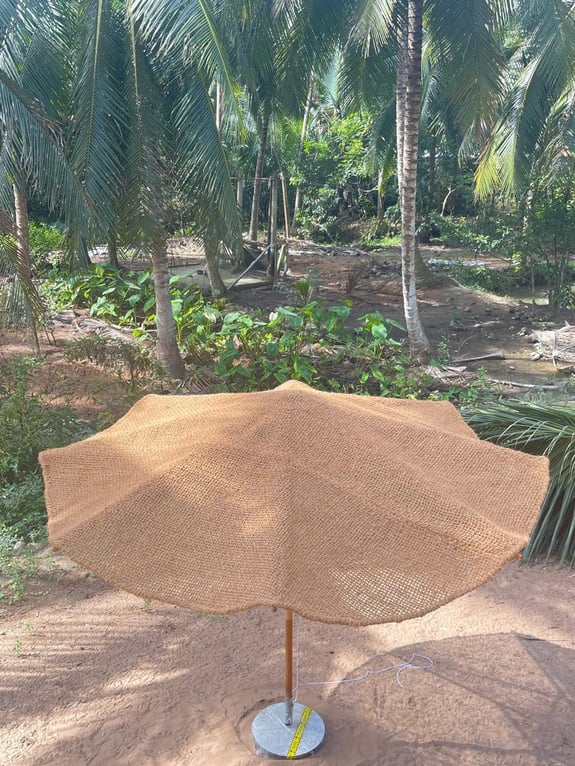
Choosing a sustainable parasol is more important than ever. Not only does it add ambiance and comfort to your garden, but it also contributes to a better environment. In this blog post, we'll share why investing in a sustainable parasol is wise, examine the environmental impact of materials, and discuss alternatives to conventional parasols.
The impact of materials on the environment
Many standard parasols are made of synthetic fabrics such as polyester or PVC, and have aluminum or plastic frames. These materials are difficult to recycle and burden the environment at every stage of their life cycle: from production to disposal. Non-sustainable fabrics are often treated with chemicals, which contribute to air, water, and soil pollution.
In addition, a low-quality parasol wears out faster, requiring more frequent replacements and producing more waste. By consciously choosing materials that are less harmful to nature and the environment, we are already making a big difference.
Alternatives to conventional parasols
Fortunately, more and more sustainable alternatives are becoming available. For example, you can choose:
Parasols with a recycled polyester fabric: These fabrics are made from recycled PET bottles and offer excellent sustainability and longevity.
Coconut fiber parasols: This coconut by-product is strong, weather-resistant, and completely biodegradable.
Bamboo or FSC wood for the frame: Bamboo grows back quickly and FSC wood comes from responsibly managed forests.
Make a conscious choice for a green outdoor space
By choosing a sustainable parasol, we contribute to less waste, lower emissions, and a greener living environment. You'll also enjoy your purchase longer and make your garden shine with environmentally friendly materials. Let's make a difference together and consciously choose sustainable solutions, even when we're enjoying the sun!
COMMENTS