
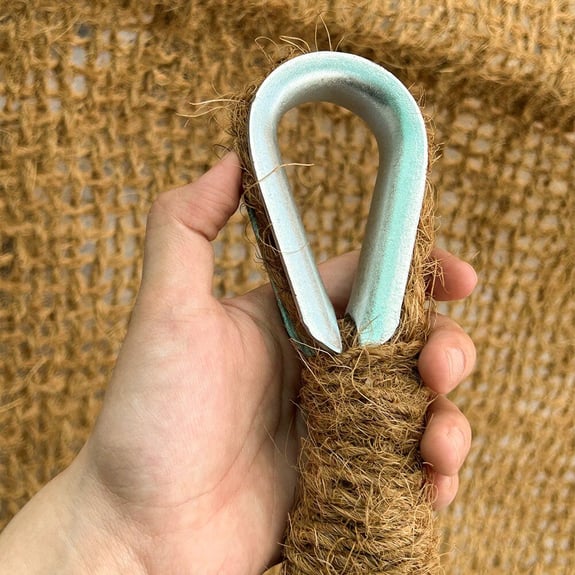
A shade sail is the perfect solution for creating a pleasant, sheltered spot in your garden, on your patio, or on your balcony, protecting you from the sun and heat. Once your CocoWeave shade sail has been delivered, the question arises: "How do I attach it correctly?" In this blog post, we'll explain the various attachment options and provide some helpful tips!
- Attaching to the facade
- Attaching to posts
- Combination of facade and posts
- Attaching to existing structures such as pergolas
- Tension and pulley system
- Attaching with coconut rope
1. Attaching to the facade
Advantages:
- Sturdy and reliable
- Allows you to install the shade sail close to the house
How does it work?
Use special wall plates or eyebolts that you securely anchor to the facade. Then hang the shade sail from the mounting points with rope, sturdy rings, hooks, or snap hooks.
Tip:
Coconut fiber shade sails temporarily become heavier when wet. Check beforehand whether your wall can handle the weight and always use wall plugs suitable for your wall type.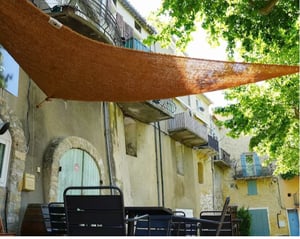
2. Attaching to poles
Advantages:
- Flexible placement
- Ideal if there are no walls nearby
How does it work?
Insert sturdy wooden or metal poles into the ground at the desired locations. Use ground anchors or concrete for extra stability. Attach an eyebolt to the top of the pole to secure the shade sail.
Tip:
Place the poles at least 10 to 20 centimeters further apart than the dimensions of the shade sail. This allows enough space to stretch the shade sail.
3. Combination: Facade and Posts
Many people opt for a combination of wall mounting and one or more posts. This allows you to hang the sail directly on the facade of your house and on one or two separate posts.
Advantages:
- Flexible in shape and placement
- Fewer materials required than using just freestanding posts
4. Attaching to Existing Structures
Do you already have a pergola, fence, or other sturdy structure in your garden? Then you can often easily attach a shade sail to existing points with ropes, rings, or snap hooks.
Advantages:
- Simple
- Little to no additional materials required
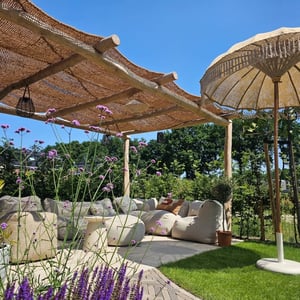
5. Setup with a tension and pulley system
For larger shade sails, or if you want to regularly tighten and untension the sail, a tension system (with pulleys) is ideal. This allows you to easily tighten the sail or loosen it in strong winds, for example.
6. Attaching with coconut fiber rope
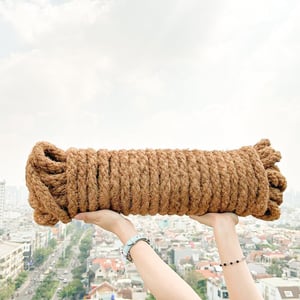
Each shade sail comes standard with 20 meters of coconut fiber rope. In principle, you can always hang the shade sail with this rope, but sometimes additional mounting hardware makes it a bit easier.
If you want to attach the shade sail with just the rope, we recommend using the rope in one piece. Work from attachment point to attachment point. Start at a corner; the order doesn't matter. Tie the rope to the metal loop of the shade sail. Then attach this to the pole or wall and tie a knot there as well. Finally, let the rope run loosely to the next point. Wrap or tie the rope around something before tying the next point. Then you attach the next corner, and so on. It's important that you can pull each point individually to tighten the rope.
Note: Make sure the rope isn't under tension between the various attachment points. This will pull the corners together and prevent proper tension.
Additional tips for attaching your shade sail
- Before ordering, check which dimensions will fit best. Make sure the shade sail fits within these limits. It's better to leave a little more space on the sides than to have your shade sail too wide to tension properly.
- Allow sufficient space between the attachment points. This allows you to properly tension the sail. Allow at least 10 to 20 centimeters extra for each attachment point.
- Ensure sufficient tension with the rope, tension hooks/screws, or a pulley.
- Use stainless steel mounting hardware for a longer lifespan.
A shade sail can be attached in many ways: to the facade, to poles, to existing structures, or even with convenient tensioning systems. With the right mounting, you'll enjoy your shade sail for years to come.
Want to know which mounting materials and options best suit your situation? Feel free to contact us for advice!
COMMENTS